

Written by Tami Best, MS, RDN, IFNCP
Introduction
Nitric oxide is an unstable gas made up of one nitrogen molecule and one oxygen molecule. It plays a role in relaxing blood vessels promoting increased oxygen and nutrient flow to working muscles. This plays a critical role in cardiovascular health. In addition, many disciplined athletes are seeking ways to boost nitric oxide naturally in a way that supports improved endurance and optimal athletic performance.
Understanding Nitric Oxide
Because nitric oxide is an unstable gas, it is important to support the body’s ongoing production of this chemical messenger that is needed for blood flow. Nitric oxide supports what is known as vasodilation which is a widening of blood vessels. This widening or relaxation of blood vessels promotes improved flow of blood, oxygen and nutrients to the body’s tissues.
How Nitric Oxide Affects Endurance
Nitric oxide plays a role in athletic endurance by improving muscle efficiency and improving muscle contractions due to the improvement in blood and oxygen flow. These benefits in turn help to increase total time to exhaustion (TTE) potentially allowing athletes to perform better for a longer period of time.
Natural Ways to Increase Nitric Oxide
- Increase Dietary Sources of Nitrates
One of the best ways to increase the body’s supply of nitric oxide is to consume a diet rich in plant sources of nitrates. These nitrates are converted to nitric oxide and are different the nitrates found in processed foods. Nitrates in processed foods come in the form of sodium nitrate and can form harmful nitrosamines which have been linked to potential negative health outcomes.
Since nitric oxide is unstable, you can help maintain the body’s levels of nitric oxide by consuming foods rich in antioxidants with nitrate rich food items. The antioxidants help make the nitric oxide more stable so there is a longer period of time to have a positive impact on cardiovascular health and athletic enhancement.
Foods rich in nitrates (which are also high in antioxidants) include:
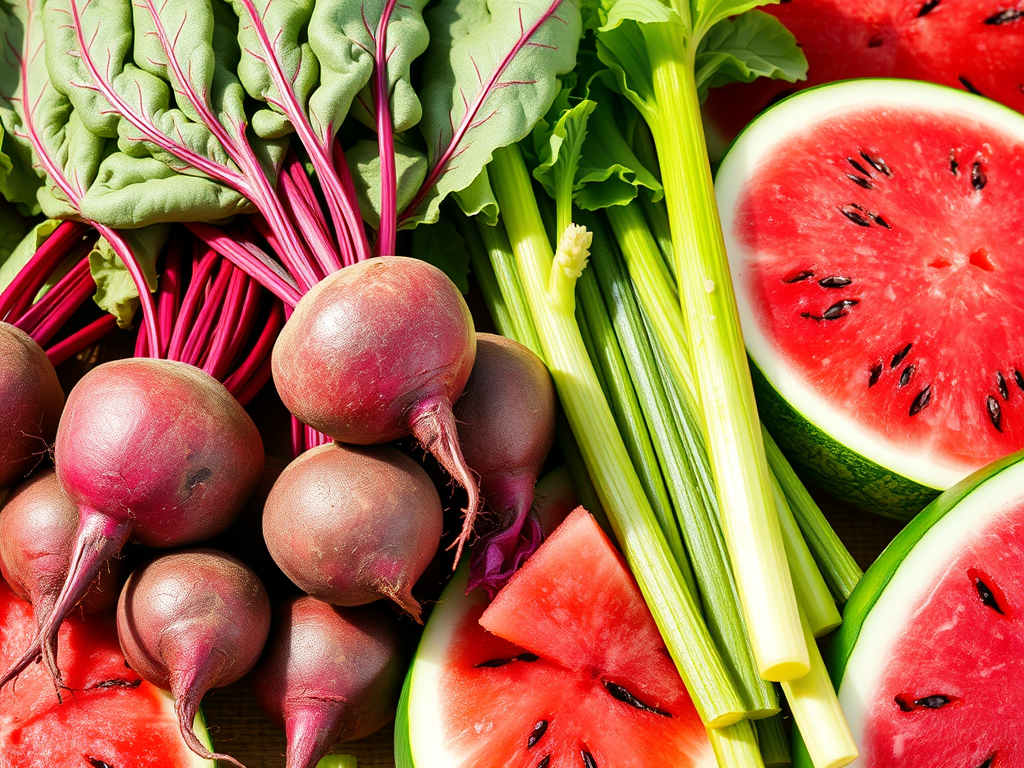
- Beets and beetroot juice
- Green leafy vegetables
- Celery
- Watermelon
- Garlic
- Citrus
It is relevant to note that mouth and gut bacteria are needed to reduce nitrates to a form that can be converted to nitric oxide. Without these bacteria there is a lower availability of the precursors that allow the body to produce nitric oxide. Be thoughtful about things that can destroy these beneficial bacteria such as antibiotic and mouthwash use.
- Exercise and Its Impact on Nitric Oxide Production
Athletes can feel good about the fact that exercise is a great way to help endothelial cells produce more nitric oxide all on their own. Endothelial cells are the cells that line blood vessel walls. So, the more conditioned an athlete is, the more likely they will have enhanced nitric oxide levels.
3. Supplements That May Help
Some athletes may find it helpful to use supplements to enhance nitric oxide levels. L-arginine, L-citrulline and Citrulline malate are a few options. Arginine and citrulline are amino acids needed for various functions in the body. Citrulline is converted to arginine in the body. Research shows that L-citrulline is the most effective at increasing nitric oxide levels. More research is needed to see if L-arginine and Citrulline malate are beneficial for increasing nitric oxide levels.
These supplements are usually safe and well-tolerated for short periods of time however it is always important to check with your registered dietitian, pharmacist and/or health practitioner before beginning a new supplement.
Another option is to increase food sources of these amino acids. Arginine is found in a wide variety of protein-rich foods such as soybeans, pumpkin seeds, poultry, legumes and dairy. Citrulline is found in a variety of melons, cucumbers, summer squash and pumpkin.
Conclusion
Nitric oxide is valuable in promoting cardiovascular health and controlling blood pressure. The same blood vessel relaxing mechanism that enhances our health may promote improved endurance in athletes and increased total time to exhaustion.
Increasing foods rich in nitrates such as beets and green leafy vegetables as well as foods rich in L-arginine and L-citrulline can support availability of nitric oxide in the body. Be thoughtful about mouthwash and antibiotic use which can interfere with the production of nitric oxide.
Nitric Oxide Boosting Meal Plan:
| Spinach and Swiss Cheese omelet 1 cup of mixed berries | Spinach is nitrate-rich Cheese is arginine-rich Berries are antioxidant-rich |
| Turkey and cheese sandwich on sprouted grain bread Sliced watermelon Side-salad with celery and cucumbers | Turkey and cheese are arginine-rich Watermelon is antioxidant, citrulline and nitrate-rich Celery is nitrate-rich Cucumbers are citrulline-rich |
| Baked salmon Roasted beets Baked sweet potato | Roasted beets are nitrate-rich Baked sweet potato is antioxidant-rich |
Additional Resources
Jones AM, Thompson C, Wylie LJ, Vanhatalo A. Dietary Nitrate and Physical Performance. Annu Rev Nutr. 2018 Aug 21;38:303-328. doi: 10.1146/annurev-nutr-082117-051622. PMID: 30130468.
Jones AM, Vanhatalo A, Seals DR, Rossman MJ, Piknova B, Jonvik KL. Dietary Nitrate and Nitric Oxide Metabolism: Mouth, Circulation, Skeletal Muscle, and Exercise Performance. Med Sci Sports Exerc. 2021 Feb 1;53(2):280-294. doi: 10.1249/MSS.0000000000002470. PMID: 32735111.
Baskurt OK, Ulker P, Meiselman HJ. Nitric oxide, erythrocytes and exercise. Clin Hemorheol Microcirc. 2011;49(1-4):175-81. doi: 10.3233/CH-2011-1467. PMID: 22214688.
Park HY, Kim SW, Seo J, Jung YP, Kim H, Kim AJ, Kim S, Lim K. Dietary Arginine and Citrulline Supplements for Cardiovascular Health and Athletic Performance: A Narrative Review. Nutrients. 2023 Mar 3;15(5):1268. doi: 10.3390/nu15051268. PMID: 36904267; PMCID: PMC10005484.
Discover more from Promise of Vitality
Subscribe to get the latest posts sent to your email.
